
Mẫu Tranh Phong Cảnh Dễ Vẽ Cho Người Mới Bắt Đầu
Landscape painting is a wonderful way to relieve stress and practice color theory. Even without prior art experience, you can create stunning landscape artworks using simple compositions and clear step-by-step techniques.
Here is a collection of beginner-friendly landscape painting ideas along with a detailed guide to help you complete your very first masterpiece.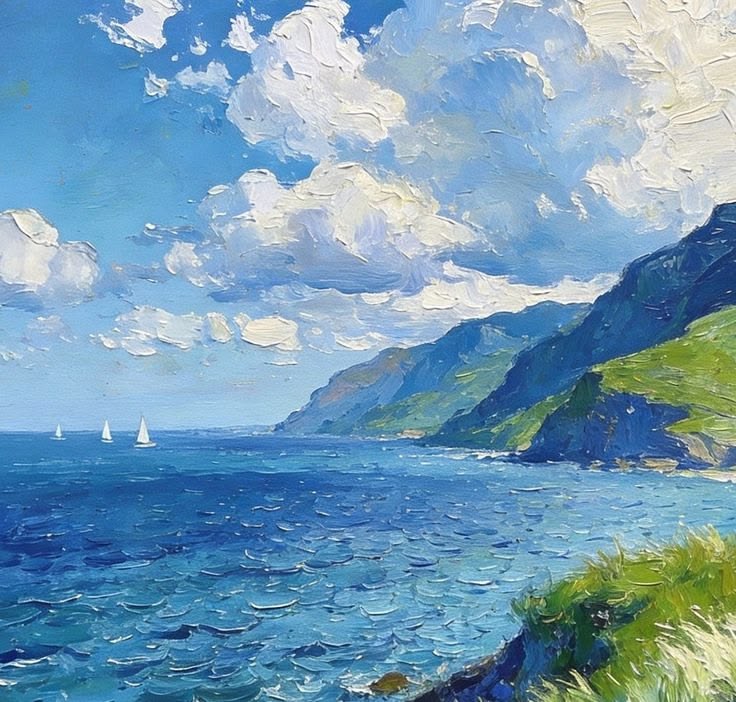
1. Top Easy Landscape Painting Ideas for Beginners
Sunset Over the Ocean: A simple composition with a straight horizon line, a glowing sun, and vibrant orange-pink gradients reflecting on the water.
Green Meadows & Flower Fields: Dominated by soothing green tones with easy brush dabs to represent wildflowers and distant trees.
Galaxy / Starry Night Sky: Uses sponge-dabbing or toothbrush-splattering techniques to create magical starry skies over dark silhouettes.
Autumn Forest: Warm red, yellow, and orange foliage reflected across a calm, still lake.
Minimalist Snowy Mountains: Simple geometric triangular shapes forming mountain peaks against a dreamy pastel sky.
2. Step-by-Step Landscape Painting Guide for Beginners
Step 1: Set the Horizon Line
Divide your canvas horizontally into thirds (Rule of Thirds).
Place the horizon line along the top or bottom third for natural depth.
Step 2: Paint the Background
Block in the sky and ground/water first.
Blend colors smoothly (gradient) from dark to light for sunset or night sky effects.
Step 3: Add Main Elements (Midground & Foreground)
Use darker tones for closer elements like trees, mountain ridges, or coastal rocks.
Apply atmospheric perspective: Objects farther away should be smaller and lighter, while closer objects are larger and more detailed.
Step 4: Add Highlights and Fine Details
Use white or pale yellow to add sun reflections, water ripples, or twinkling stars.
3. Common Mistakes in Beginner Landscape Paintings & How to Fix Them
Placing the Horizon Line Dead Center: This cuts the painting rigidly in half. Always shift it slightly above or below the center.
Muddy or Smudged Colors: Caused by applying wet paint over an un-dried background. Let the base layer dry completely (or use a hairdryer) before adding details.
Flat Perspective: Drawing distant and foreground elements with the same size and intensity.
4. Join a Relaxing Landscape Art Workshop for Beginners
If you want to complete a beautiful canvas painting to display at home without buying bulky art supplies, guided art workshops offer the perfect weekend escape.
Step-by-Step Guidance: Instructors walk you through sketching, color mixing, and finishing touches.
All Supplies Provided: Canvases, premium acrylics/watercolors, and specialized brushes are fully prepared for you.